
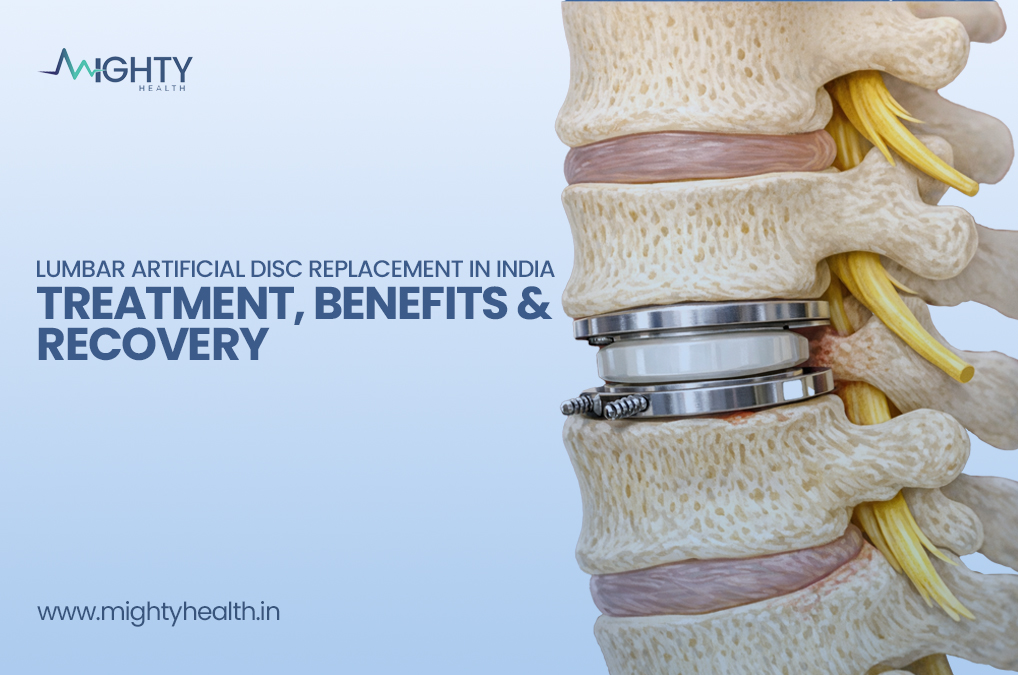
Understanding Lumbar Artificial Disc Replacement
What Is Lumbar Artificial Disc Replacement?
In a lumbar artificial disc replacement, a damaged spinal disc in the lower back (lumbar spine) is surgically removed and replaced with a prosthetic disc that is biomechanically developed. Instead of fusing the afflicted spinal segment, as is the case with conventional spinal fusion procedures, the objective is to maintain natural motion at that location.
Why Is Motion Preservation Important?
Disc replacement preserves range of motion and flexibility, in contrast to spinal fusion, which limits movement at the treated level. Maintaining motion can:
- Lessen the strain on nearby discs
- Boost functional results
- Reduces the possibility of neighbouring segment degeneration
Who is a Candidate for Lumbar Disc Replacement Surgery?
Depending on the patient and the surgeon's judgement, there may be different requirements for being a candidate for lumbar disc replacement. Nonetheless, a few common elements that are usually taken into account are:
Age: Although age restrictions may differ, candidates for lumbar disc replacement are often between the ages of 20 and 60.
Failed conservative treatment: Candidates should have already experienced a sufficient trial of conservative treatments, including medication, physical therapy, and injections, without experiencing enough pain alleviation.
Single-level degenerative disc disease: Patients with symptomatic disc degeneration at a single level of the lumbar spine are frequently treated with lumbar disc replacement.
Intact spinal stability: The afflicted spinal segment should not exhibit any notable instability or aberrant motion.
Overall health: Candidates should typically have no serious medical issues and be in good general health.
Why Choose India for Lumbar Artificial Disc Replacement?
Skilled Spine Surgeons
India has neurosurgeons and orthopedic surgeons who know their stuff. Many are trained abroad, and they’re experts at motion-preserving back surgeries.
Modern Facilities
Hospitals here have the latest operating rooms, advanced imaging, navigation tech, and high-end prosthetic discs.
Affordable Care
Spine surgery in India costs up to 60–70% less than in the U.S., UK, or Europe. That includes the surgery itself, your hospital stay, and rehab.
All-Inclusive Care
A lot of medical centers offer complete packages. You get accommodation, travel support, pre- and post-op care, and physiotherapy all rolled in.
Why Do You Need Lumbar Disc Replacement Surgery?
A lumbar disc replacement is done for the treatment of chronic back pain caused by the deterioration of one's lumbar (lower back) intervertebral disc's functionality. Here are a few examples of when a lumbar disc replacement can be performed.
Disc degeneration: The deterioration (degeneration) of the lumbar intervertebral disc is an effect of the aging and wear and tear of the spinal disc from injury or normal aging processes.
Herniated disc: The result of a herniated disc is the result of the lumbar intervertebral (soft inner) tissue from the centre of the disc moving through to the outside of the lumbar intervertebral disc and compressing the spinal (nervous) system, causing severe pain, weakness, and other symptoms of numbness and/or tingling in the legs and lower back.
Failed non-surgical treatments: Most people start with non-surgical treatments—stuff like physical therapy, pain meds, or even spinal injections. But if those don’t cut it and the pain sticks around, that’s when doctors start talking about lumbar disc replacement.
Desire to preserve motion: Lumbar disc replacement isn’t the same as the old-school spinal fusion. Fusion locks two vertebrae together after removing the damaged disc. Disc replacement, on the other hand, swaps out the bad disc for an artificial one. The whole point is to keep your spine moving and flexible, not stiff and fused.
How to Prepare for Lumbar Disc Replacement Surgery?
A thorough assessment of your medical history, physical examination, and diagnostic testing are all part of getting ready for the treatment.
Medical Evaluation: Get a comprehensive medical evaluation that may involve blood tests, imaging tests (such CT, MRI, or X-rays), physical examinations, and a review of your medical history. This assessment aids your surgeon in determining any possible issues and evaluating your general health.
Medication and Supplements: Give the surgeon a detailed list of all the drugs, supplements, and herbal remedies you currently take. To lower the risk of severe bleeding, some drugs, such blood thinners, may need to be changed or stopped prior to surgery.
Lifestyle Modifications: Prior to surgery, your surgeon could advise making specific lifestyle modifications. To maximise your general health and speed up healing, these can include keeping a healthy weight, giving up smoking, eating better, and exercising frequently.
Pre-operative Instructions: Generally, you will be instructed to abstain from food for a predetermined amount of time prior to the surgery.
Setting Up Your Home: Modify your living area as needed to support your recuperation. Eliminate any trip hazards and, if necessary, think about acquiring assistive technology like an elevated toilet seat or a grabber tool.
Lumbar Disc Replacement Surgery Procedure
The following is an overview of the procedure:
Anaesthesia: The surgery is normally conducted under general anaesthesia.
Incision: This is where the surgeon cuts on the lower back, usually in the midline.
Gain of access to the spine: The surgeon pushes the muscles and tissues to the side in order to reach the specific affected lumbar spine. This can be retracting or cutting some muscles and ligaments.
Removal of the disc: The surgeon takes away the damaged or herniated disc by ensuring that he or she does not cause harm to the surrounding nerves and structures.
Disc space preparation: This is a procedure conducted by the surgeon to prepare the area between the two vertebrae to receive the artificial disc. This could include the elimination of any leftover disc material, reforming the bony endplates and establishing the correct space where the implant is to be placed.
Insertion of the artificial disc: The surgeon takes his time to place the artificial disc implant on the bodies of the vertebrae. The nature of the disc that is used can change, though the implant is expected to resemble the action of a natural disc, making it stable and allowing movement.
Closure: When the disc replacement is completed, the surgeon allows the wound to be closed using sutures or staples. Muscles and tissues that were displaced or severed in the process are also restored.
What is the Recovery Process for Lumbar Disc Replacement Surgery?
The general outline of the recovery process is as follows:
Stay in Hospital: After surgery, patients are normally admitted to the hospital so that they can be closely monitored. Painkiller drugs and antibiotics can be used, and physical therapists can start up early mobilisation and soft exercises.
Pain Management: Pain and discomfort are usual in the post-lumbar disc replacement surgery. Postoperative pain will be mitigated by the doctor's prescriptions of pain drugs. These drugs can be tapered slowly as the recovery process goes on.
Activity Restrictions: Patients should not bend, lift heavy objects or engage in any other strenuous activity that may strain the spine during the first few months of the recovery period. The surgical unit will offer certain rules on the limits and restrictions of activities.
Physical Therapy: A physical therapist will also offer the patient physical exercises aimed at enhancing strength, flexibility and range of motion. This assists in the rehabilitation of the spine and the surrounding muscles. Depending on the progress, the therapy sessions can take a few weeks or months.
Progressive Resumption of Activities: The patients can gradually resume their activity with the approval of the surgical team and as their recovery goes up. This could involve going back to work, driving and undergoing low-impact activities or recreational activities. Yet, strenuous activities or lifting heavy objects cannot be undertaken during the first months.
Risks or Complications of Lumbar Disc Replacement Surgery
Similar to any other surgery, lumbar disc replacement has some risks and complications that include:
Infection: Any surgical procedure has the risk of infection. Though it is uncommon, it may also happen in the surgical wound or in the area surrounding the implanted disc, and cause pain, swelling, redness, and other more serious complications.
Injury to the nerve or spinal cord: It is possible to damage the adjacent nerves or even the spinal cord in the process of the surgery. This may lead to neurological problems, including weakness, numbness or even paralysis. There are also low but existent chances of nerve or spinal cord injury.
Implant-related complications: The artificial disc applied in the replacement surgery is subject to some complications. These may comprise implant migration (appearing in a different position than the intended one), fracture, wear, and tear or implant loosening. Such complications might need further surgeries or treatment.
Allergic reactions: There are rare instances when patients can be allergic to materials applied in the artificial disc implant. This may lead to both localised and systemic mild to severe symptoms.
Persistent/ repetitive pains: Although lumbar disc replacement is supposed to cure chronic back pain which is chronic, it is possible that the operation might not complete the process of curing the pain. The patients might also complain of persistent or recurrent pain after the surgery, but this is usually not as severe as it was the case prior to the surgery.
Blood clots: Blood clots can develop during any surgical operation, especially in the legs (deep vein thrombosis). In case of pulmonary embolism (when the blood clot transfers to the lungs), it may be fatal. The risk of blood clots is generally reduced by such measures as early mobilisation, compression stockings or blood-thinning drugs.
Anaesthetic complications: General anaesthesia or spinal anaesthesia is associated with its own risks as well as possible complications such as allergic reactions, respiratory issues or undesirable reactions to the anaesthetic drugs.
Benefits of Lumbar Disc Replacement Surgery
The following are some possible advantages of replacing a lumbar disc:
Preserves motion: Lumbar disc replacement attempts to preserve normal spinal movement, in contrast to spinal fusion, which limits motion at the fused level. The artificial disc functions similarly to a healthy disc. The lower back may be able to move more freely and naturally as a result.
Decreased risk of neighbouring segment degeneration: Spinal fusion surgery may put more strain and stress on nearby spinal levels, which, over time, may cause such segments to deteriorate more quickly. By maintaining normal motion and lessening the strain on nearby discs, lumbar disc replacement may help lower the likelihood of neighbouring segment degeneration.
Faster rehabilitation and recovery: Lumbar disc replacement usually requires a shorter recovery time than spinal fusion. Patients may have less discomfort and stiffness after surgery because the goal is to preserve motion.
Possibility of better long-term results: Research has indicated that lumbar disc replacement may have positive long-term effects, such as pain alleviation, enhanced functionality, and increased patient satisfaction. Certain patient demographics may benefit more from disc replacement than from standard spinal fusion, according to some studies.
Preventing fusion-related complications: Pseudarthrosis (failed fusion), neighbouring segment disease, and instrumentation failure are among the hazards associated with spinal fusion surgery. Although lumbar disc replacement carries some risks of its own, it does away with the requirement for fusion and the problems that come with it.
To Conclude…
Lumbar artificial disc replacement offers a way to keep your spine moving while easing chronic lower back pain from worn-out discs. These days, India stands out for this surgery. You get experienced surgeons, top-notch hospitals, and prices that don’t break the bank.
Thinking about getting ADR in India? Talk to a spine specialist. They’ll figure out if you’re a good candidate, walk you through what to expect, and help you plan your recovery. When you prepare well and stick with rehab, you can get real, lasting relief—and life just feels better.