
If your knee is in pain because of grinding, locking, swollen, or pain that makes you unable to walk properly to the mailbox, you are not alone. Millions of people reach a time when normal life starts becoming limited due to the pain coming from the joint. Total knee arthroplasty has established itself as one of the most effective procedures that can return one to live normally. Even if it is not going to fix everything overnight, it can feel like an excellent solution.
In this article, you will get an overview of the procedure itself, who can benefit from it, and what rehabilitation looks like in general terms.
Who Is Actually a Good Candidate?
Knee surgeries don't get approved based merely on bad x ray images, but because pain and immobility have already won the day.
You may be eligible if:
- Cartilage in your knee is worn out due to serious osteoarthritis, rheumatoid arthritis, post-traumatic arthritis or osteonecrosis causing pain when the bone rubs against another bone.
- Pain does not allow you to walk for over a few blocks, climb stairs, rise up out of a chair, or get sleep at night.
- Less invasive approaches such as losing weight, physical therapy, taking anti-inflammatory drugs, steroid injections, hyaluronic acid injections, or using braces have not alleviated pain.
- You have visible deformities in the joint or swelling that keeps bothering you.
There is no specific age limit. Most patients are aged around 50-80 but younger patients can have severe damage or the elderly ones can be active and in good shape regarding health. However, more important than your age is your health condition, your motivation, and reasonable expectations.
Some conditions should stop the doctors from doing surgery - e.g. current infection either in the knee or elsewhere, uncontrolled diabetes, acute vascular disease, and all the rest serious conditions that put the operation at risk.
The good doctor will discuss possibilities and limitations with the patient – he will show images, explain statistics, and learn what the patient would like to be able to do if assisted. For instance, if the patient wants to take his dog for a walk, it is possible surgeon can help.
What Happens During the Procedure Itself
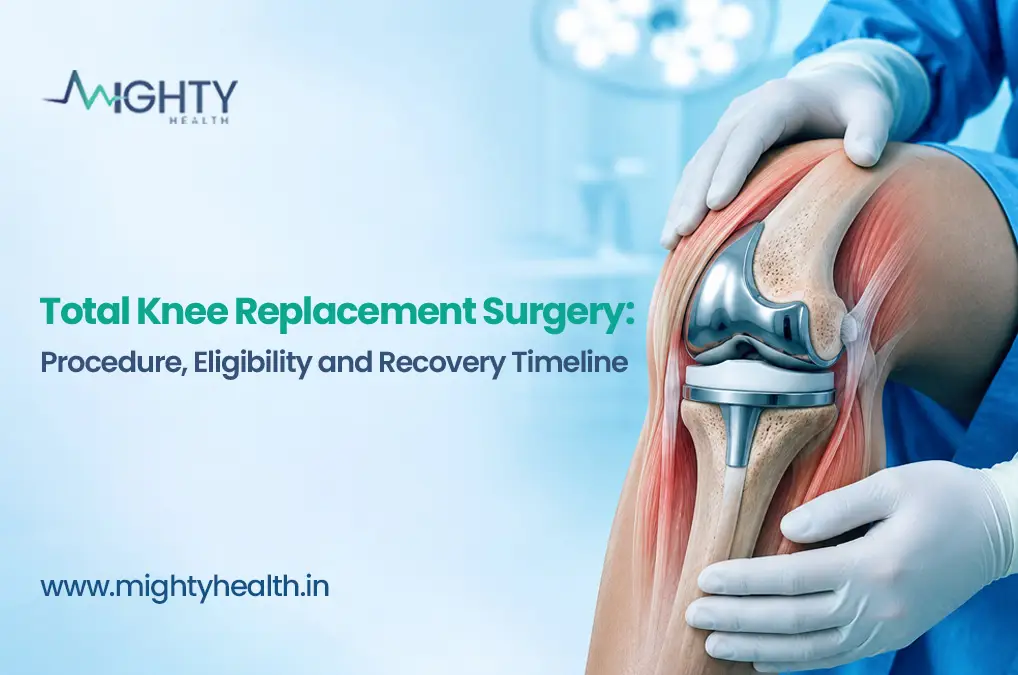
A total knee replacement is basically a resurfacing procedure. The surgeon will eliminate the damaged cartilage along with a layer of bone from the end of the upper leg bone (the femur), the upper end of the lower leg bone (the tibia), and sometimes even from the underside of the kneecap (the patella) as well. The prepared surfaces are then replaced with components made of metal and high-strength plastic, providing a smooth and stable joint surface.
The surgery typically takes one to two hours. You will either be given general anaesthesia, or, in most cases, a spinal or regional anaesthesia which leaves you conscious but numbs the waist down. Many hospitals today utilize a nerve block that makes the knee more comfortable for up to one day post-surgery.
To perform the procedure, the doctor cuts through the knee to expose the surfaces of the knee joints while cautiously relocating the kneecap, and preparing the surfaces of the bones in a way that the new implants will fit flawlessly. There will be a plastic spacer to aid in this slide. The cut is then closed as the surgeon prepares the patient for recovery.
With the use of modern methods, use of minimally invasive technology on a few patients, robotic assistance in a few places and better designs of implants, this procedure has proved to be more sophisticated and recovery faster than before. However, it is still major surgery that deserves respect.
Recovery Timeline: What to Expect, Not What to Fear
Recovery times are counted in months, not days. Complete recovery may take up to a year, but most patients start feeling much better before that. Below you will find a realistic timeline according to modern orthopedics.
Day of surgery to discharge (usually 0–2 nights)
You will be able to stand up and take a few steps with a walker the same day or the following morning. Early movement helps decrease the chances of blood clots and prevent the new joint from becoming stiff. Pain will be managed with nerve blocks and medication taken by mouth, ice, and raising the affected limb. Most patients return home once they have achieved the ability to walk a few steps, turn in bed to lift their legs into and out of bed with support.
You may also checkout: How Long Does a Knee Replacement Last?
Weeks 1–2
This tends to be the most difficult phase. Swelling, bruises, and night-time pain are all typical. You'll be walking short distances multiple times a day using either a walker or crutches, performing your prescribed exercises (ankle pumps, quad sets, and heel slides), and icing your knee religiously. Sleep may be interrupted. Make sure you get assistance for cooking, washing clothes, and bathing in advance—you'll require it. At the end of the second week, many people visit physical therapy for the first time and have their stitches removed.
Weeks 3–6
With the progress, progress is seen. The majority of patients make the switch from walker to cane, and then usually stop using the cane after accomplishing short distances inside their home. At this stage, range of motion goals are set. These include complete extension and flexion to the degree of 90–110 degrees. Driving should be resumed in the period of four to six weeks after stopping taking strong analgesics and ensuring the possibility of pressing the brake safely (patients with right knee operations typically need more time). Working on a desk becomes doable for many people. Swelling is still present but less intensive. Formal physical therapy schedule provides three sessions a week and focuses on exercises aimed at strength improvement and gait practice.
Weeks 6–12
Normal activities feel more routine. You should be able to walk independently, climb stairs in an alternating fashion, and get back to performing most household activities. Low-impact activities, such as cycling on a stationary bike, swimming (once the wound has fully healed), and walking longer distances, are generally recommended. Resting pain will have subsided; pain during activities is still common and improves. Many patients can return to sedentary or light work during this time. Workers with physically demanding jobs may require closer to three months or more.
Months 3–6
Strength and endurance continue to improve. Most leftover swelling reduces. There is a good chance that one will be able to play golf, dance, be engaged in hiking on relatively flat terrain, etc. Kneeling can still feel uncomfortable or strange for some people—this varies among individuals. Formal therapy usually ends, but it remains important to continue exercising at home.
Months 6–12
The last benefits are felt at this stage. The knee does not feel so out of place anymore, the muscles come back to their normal strength, and confidence comes back. A lot of patients say that the joint seems to “be theirs” again. Improvements might still continue even after one year.
The some individual elements may make this time more or less long—general condition before the operation, age, weight, job of the body, and how active the patient is.
Making Recovery Work for You
There are several good habits that can lead to good results:
Consider physical therapy your work. The most common reason for a plateau is not showing up for sessions or not doing the exercises properly.
Use ice, elevation, and compression if required to control swelling. Know that swelling is more effective at delaying progress than most of the things.
Make sure to protect your incision and look for infection symptoms (too much redness, drainage, fever).
Eat the proper amount of food and drink enough liquid. Proteins and vitamins are important to achieve healing.
Use your patience emotionally. It is completely normal to feel frustrated in the first weeks after the operation. People who manage to overcome this period say that it is worth it.
Finally, remember that the knee you have now is not meant for heavy sports; it is good for daily activities: walking, biking, swimming, and playing golf. Most modern implants will last for 15–20 years or more in most cases.
The Bottom Line
Total knee replacement is one of the most efficient orthopedic procedures as long as it is performed in the right circumstances and the patient participates actively in his/her recovery. Although knee replacement does not reverse the clock to the age of 25, it almost always helps the patient restore the ability to walk and sleep without too much effort.
If the condition of your knee is suffering, talk to a qualified orthopedic surgeon who specializes in joint surgeries. Be sure to ask all the questions you have and take your X-rays and detailed information about what the term “better” means in your case. Indeed, the conversation can become the first step towards regaining the lost quality of life.
Read Also: Knock Knee Surgery Treatments in India
Frequently Asked Questions (FAQs)
What is the normal recovery time for a total knee replacement?
It normally takes between three and six months before a person can resume their normal activities after undergoing a total knee replacement surgery, but full recovery may take up to one year.
How painful is a knee replacement on a scale of 1 to 10?
Using a scale from 1 to 10 where 10 represents the highest level of pain one can feel, the pain associated with a knee replacement will usually be around a 6 to 8 in the first few days after surgery, although sometimes it may reach levels of 9 or 10.
How long does it take to walk normally after total knee replacement?
It usually takes between 3 and 6 months before most people start walking normally without aid after undergoing a TKR, but even after a year, their strength and endurance will still be increasing.
What is the success rate of knee replacement?
What is the success rate of partial knee replacement ...Knee replacement has a success rate of 90% - 95%. It is used for alleviating chronic pain and restoring joint functions in well-qualified patients.
How to sleep after total knee replacement?
The recovery process following a total knee replacement may result in trouble sleeping owing to pain, swelling, and stiffness, particularly in the initial weeks of healing. You will find that positioning yourself properly and preparing for bed can make sleep easier.
Want to Know: Knee Meniscectomy Treatments in India