
You’ve been picked as a donor. To someone who’s either a stranger or a known person, your healthy stem cells are going to be life-saving due to a blood disease afflicting them. You were excited and said yes to the challenge. Now that the donation is complete, thoughts arise: what will happen to you?
It’s completely normal to have these thoughts. Being asked to give up part of yourself to save someone else can make you feel overwhelming, and many strange questions come to your mind after a simple internet search, like: does a bone marrow donor die, or does donating bone marrow shorten your life? This can make anyone feel anxious. So let’s look into what happens in the body of a donor after the procedure and what complications might occur in this regard.
First, a Quick Recap of What You Actually Donated
There are two types of stem cell donation, which change the recovery process.
The more widely used way of donating stem cells these days is through peripheral blood stem cell (PBSC) donations. In PBSC, you will receive medication injections for a period of time before donating to stimulate stem cell production and movement into the blood. When it’s time for donation, blood will be drawn from one hand, purified for stem cells, and returned to the other arm.
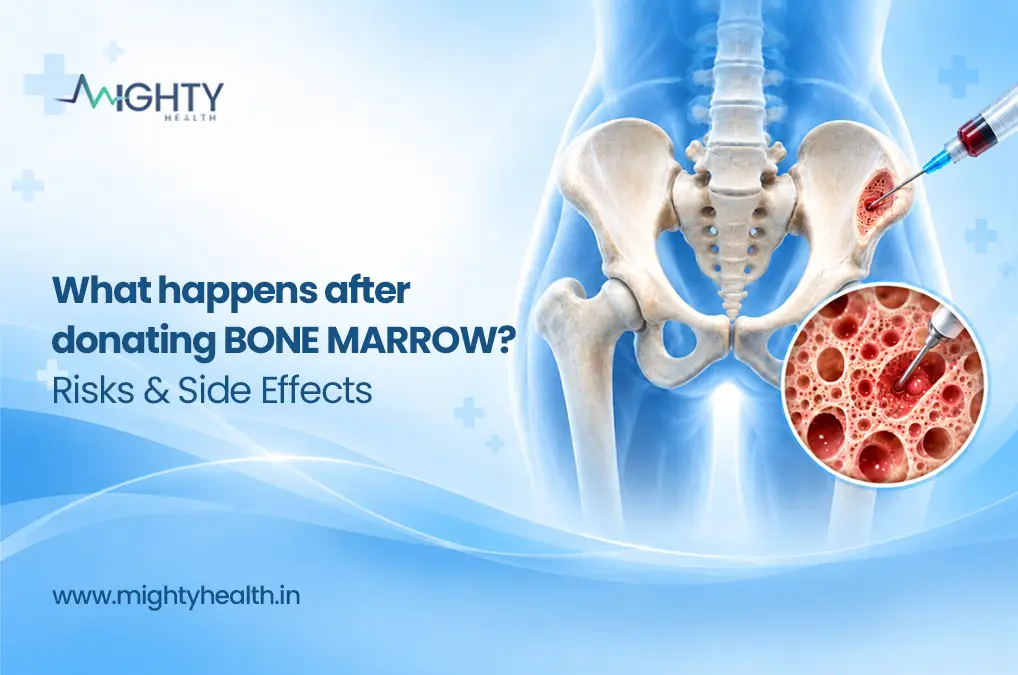
Bone marrow donation, however, is a surgical operation. The procedure involves giving anesthesia, during which doctors extract liquid bone marrow from the back of the pelvic bone using a needle. During the entire procedure, the person is asleep and won’t feel a thing.
Due to the differences in the procedures, the recovery is different as well.
The First 24 to 72 Hours
For people who have donated PBSC, the preparation period before donation often seems more uncomfortable than the procedure. During this time, bone pain, muscle pain, headaches, and fatigue abound but end swiftly after the donation is finished.
In contrast, for people who have donated bone marrow, the first day is quite different. People wake up after anesthesia feeling groggy, a little nauseous, and possibly unable to eat or walk until the anesthesia has worn off completely. The main complaint after donation tends to be soreness in the lower back or hips, as if the person has overexerted himself or herself in the gym. Sitting for a long time, climbing stairs, or bending over may not be easy for some time.
Both types of donation come with mild discomfort, fatigue, and some drowsiness that are neither surprising nor unusual.
The Next Few Weeks: Getting Back to Normal
This is where the timelines start to differ, and it’s helpful to be aware of this in order to plan your calendar realistically.
With most PBSC donors, recovery time is about a week, while bone marrow donors need some time to feel better, as soreness and bruises may stay at the collection site for a couple of weeks. Of the donors, only a small proportion (around 10%) have some pain lasting for longer periods of time. The pain is described as being similar to sciatic pain and can result from minor inflammation near the nerve roots that are affected during donation. Fortunately, this pain usually goes away in due course and with the help of over-the-counter pain medication.
In fact, bone marrow is regenerated. The amount that is taken during donation is very small in comparison to the overall amount of marrow, and therefore, it is usually restored after a few weeks.
So, Does Donating Bone Marrow Shorten Your Life?
One of the most widely searched queries on the subject, and it rightly deserves a straight answer: No. The existing research does not prove that donations of bone marrow actually affect a donor’s life expectancy. The amount of marrow taken is negligible compared to the total volume of marrow contained in humans, and it returns back to its normal level within a couple of months. Long-term donor studies have clearly shown that the health situation of participants remains fully stable for a long period despite no evidence of adverse effects on their blood parameters or immunity.
The situation is very different in the case of organ donations because one organ is removed permanently. Bone marrow is a renewable material, closer in meaning to blood donation.
Does a Bone Marrow Donor Die? Talking About the Real (Tiny) Risks
This is an honest admission that the risk of dying through bone marrow donation is very low. The risk is not non-existent since no surgical operation that requires anesthesia is completely risk-free, but severe complications are infrequent, and even fatal results are rare, usually due to complications from the anesthesia itself and not from the extraction of the marrow.
The statistics are that serious adverse reactions occur in very few instances during the extraction of the marrow, and some of these are due to the anesthesia, including nausea, hypotension or bradycardia, all of which are usually successfully managed. Other rarer complications might include infections in the area of the surgery, temporary leg problems due to nerve damage, or excessive bleeding.
In the case of PBSC donors, the risks have an entirely different profile. The major adverse reactions in such donors are associated with the administration of filgrastim injections to increase stem cell production and include bone pain, headaches, and fatigue for several days. The process of apheresis itself entails some risks, including bruising due to the needle injection and lightheadedness – the same side effects experienced by regular blood and plasma donors.
None of the above should make one underestimate the procedure. It is a real medical procedure, and it requires appropriate preparations and consideration. However, “serious” and “dangerous” are two very different notions, and the statistics do not leave any doubt about the fact that for a healthy donor, this is a low-risk procedure that may help save a life.”
Common Side Effects You Might Actually Notice
Coming back down to earth, let's consider what is commonly experienced by donors after donation:
- Feeling exhausted or more tired than usual
- Pain, stiffness or bruising at the site where blood was taken
- Headaches
- Nausea, particularly immediately after anaesthesia
- Trouble sitting, standing or even walking up stairs due to soreness (bone marrow donors)
- Rare episodes of lightheadedness (PBSC donors)
The symptoms above are usually mild and manageable with rest and OTC pain relievers, resolving within days to weeks. Donor agencies will be following up with the donor during this time and may provide counselling services if needed.
When to Actually Worry
Most recoveries are fairly routine in nature. Still, it is best to know what symptoms should make one consider reaching out to medical professionals. One should contact their medical team in case of a high fever or discharge from the collection site that may indicate an infection, allergy or worsening pain that does not go away with medication, or numbness that is persistent.
The Bigger Picture
Take a moment to appreciate what you have accomplished! Thanks to your willingness to undergo surgery, donate bone marrow or provide an IV, someone suffering from leukemia, lymphoma, or another disease of the blood now has a chance of receiving healthy blood cells. Your body will heal in a relatively short period of time. However, in some cases, it is possible that this donation will change someone’s life forever.
You will experience discomfort; however, it will be short-lived. Every type of risk exists when donating, but in most cases, it is relatively small. Myths that can be found on the internet, such as those claiming that one is permanently harmed after donating, are shown to be unsubstantiated by research done in the area and donor registries. If anything unusual happens while you are recovering, do not hesitate to contact your transplant centre or donor registries.
Bone marrow donation is one of the rare occasions when an ordinary person can save a life. Knowing what to expect after performing donation does not make you less generous; it simply makes you more knowledgeable.
Please read this: What Is the Stem Cell Therapy Success Rate: Full Process and All Steps
Frequently Asked Questions (FAQs)
Are there any long-term effects of donating bone marrow?
It is known that there are no long-lasting ill effects on a person's health from a bone marrow donation. The human body is capable of regenerating the source of the donation within 4-6 weeks, so the immune system, the process of cellular production, and the person's health are not affected at all.
Can you live 20 years after a bone marrow transplant?
Of course, many people survive 20 years or more after a bone marrow transplant procedure. After reaching specific benchmarks, including remaining free from the disease for five years post-transplant and avoiding complications such as graft-versus-host disease, their life expectancy becomes almost equal to that of the general public.
What is the cost of 1 g of bone marrow?
Laws on organ and tissue donation worldwide prevent trade in human bone marrow. As a result, though medical bone marrow transplant surgeries in India can be very expensive (from ₹10 lakhs to ₹40 lakhs depending on the hospital and other medical factors), the biological tissue itself is free.
Can a person survive after donating bone marrow?
Yes, bone marrow donors live nearly a 100% life, because the extraction procedure is safe and poses no harm to a healthy individual. Donors regain their health completely within a period of just a few weeks because of the rapid regeneration of the extracted bone marrow cells.
Are there long-term effects of donating bone marrow?
Giving away bone marrow does not result in injury or health problems in the long run. Other than minor fatigue and slight discomfort in the lower back during the initial weeks following the donation, the body replenishes its marrow reserves through the process of recovery without suffering any impairment with regard to its immune system functioning.
Is it very painful to donate bone marrow?
Donors going through the operation will not experience any pain at all because of anesthesia. After the procedure is done, the donor may feel some soreness or stiffness at the site of surgery for a while, which will be easily addressed with some over-the-counter medicines like Tylenol.
Can a person be alive after donating bone marrow?
Absolutely, the donor will still be alive and very healthy after giving away his bone marrow. There needs to be a thorough physical evaluation of the donor prior to the procedure in order to determine if he is fit enough, thus making the risk of any danger extremely unlikely.
Read Also: Life Expectancy After Heart Bypass Surgery: What You Need to Know