
What is Robotic Knee Surgery?
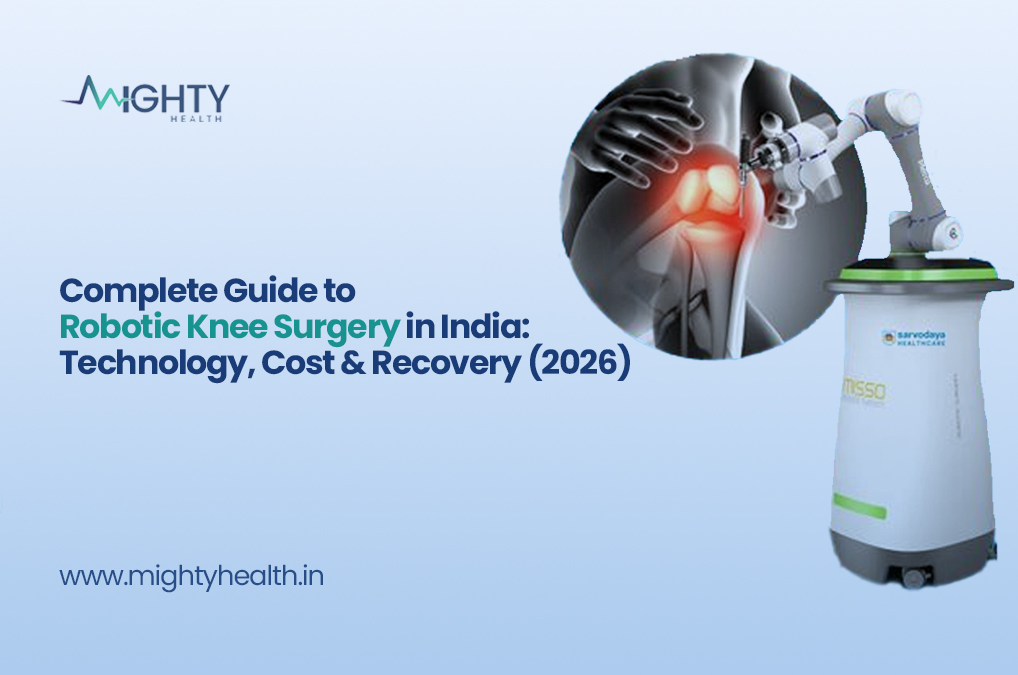
Robotic knee surgery (robotic-assisted knee replacement) is a new way to perform a complicated surgery on the knee by using a robot system to help orthopedic surgeons replace damaged joints with high precision.
Unlike what most people think, the robot does not do the surgery alone. The robot is a smart assistant and helps the surgeon by supplying them with live data and 3D images of the surgery as it is taking place, so the surgeon will know how to make each cut, how to position each joint and how to fit the new implant into its proper place based on the exact shape of the patient's body.
Traditional knee replacements use primarily manual techniques, but robotic-assisted knee replacement uses CT scans and other pre-operative imaging to provide a detailed surgical plan before the procedure begins. The combination of human knowledge and the precision of the robot is what sets robotic-assisted knee replacement apart from traditional knee replacements.
Why Robotic Knee Surgery is Gaining Popularity in India?
Robotic knee replacement is really catching on in Indian hospitals, and honestly, it makes sense. With this tech, surgeons can put implants exactly where they need to go, which means fewer alignment issues down the road and better long-term results.
The actual surgery is easier on the body, too. Surgeons make smaller cuts, there’s less blood loss, and the tissues around the knee take less of a hit. Compared to the old-school method, it just feels a lot less brutal.
What’s even better is how quickly people bounce back. Some patients are already up on their feet—walking with a little support—the day after surgery. Most folks can get back to their normal activities much faster than before.
Cost is another big plus. In other countries, robotic surgery comes with a hefty price tag. In India, though, it’s way more affordable, and you don’t have to sacrifice on quality.
Technologies Used in Robotic Knee Replacement
Knee surgery using robots has improved because of new technology, including computer-assisted navigation, artificial intelligence for surgical planning, and robot arms to perform the surgery.
The surgeon typically starts with a CT scan of the patient's knee to create a 3D model that will be used to plan how to perform the surgery in advance by determining the implant's size, angle and location.
During the surgery, a robot will help ensure that the plan is followed with a high level of accuracy to ensure that all bone cuts are made, and that there is little room for error and that the proper alignment of the implant will take place.
Robotic surgery systems such as Mako, Navio, VELYS System and others are all commonly used in many Indian hospitals. These systems offer real-time feedback to the surgeon to allow for minor adjustments to be made to the plan during surgery to achieve the best possible outcome.
Who is an Ideal Candidate?
Doctors advise robotic knee surgery for patients who have severe knee problems that fail to respond to both medication and physiotherapy treatment.
The procedure specifically targets patients who have advanced osteoarthritis, rheumatoid arthritis or post-traumatic arthritis or severe knee deformities. The medical team considers patients with ongoing pain and stiffness and reduced movement abilities for this surgical option.
The use of robotic surgery requires patients to meet certain criteria. The doctors decide who can receive treatment based on three important factors, which include the patient's current health status, their bone health and their medical history of past operations. The medical team requires an orthopedic doctor to conduct a complete assessment before they make any treatment decision.
Types of Robotic Knee Surgeries
Robotic knee surgery may not be the best option for all patients, so a surgeon may decide on the type of total knee replacement procedure based on the patient's level of arthritis.
Total knee replacement surgery is usually recommended for patients who have advanced arthritis, as it includes replacing the entire joint.
Partial knee replacement surgery could also be used for patients who have damaged one of the three bones that support the knee, allowing surgeons to use existing healthy bone and improve the patient's recovery time compared to total knee replacement surgery.
Bilateral knee replacement can be performed so that both knees are replaced at the same time or separately. If the patient has previously had a knee implant that has failed or worn out, the patient may qualify for a revision of the previous device.
Cost of Robotic Knee Surgery in India (2026)
The greatest advantage of robotic-assisted total knee replacement surgery in India is the value of the procedure itself. The cost of surgery in India is much lower than comparable surgical procedures performed in the U.S. and Europe, while still being technologically sophisticated.
Depending upon one’s location or the choice of hospital and/or surgeon, the average cost per patient ranges between ₹250,000 to ₹450,000 (or ₹250K to ₹450K). In metropolitan areas such as Delhi NCR and/or Mumbai, the cost of surgery can range from $4200 to $5400 (equivalent to ₹350K to ₹450K), and some patients will pay as much as ₹500K to ₹800K ($10,000 to $15,000) for their total knee arthroplasty depending upon the selection of an implant, the level of complexity involved, and the hospital's provided services.
On average, the total cost of surgery includes physician fees, robotics used, implants, length of hospitalisation, and physiotherapy services received. The total amount of the procedure will also be determined by the following factors: the quality/reputation of the hospital; the skill/experience of the surgeon; the type of implant; and the city in which the surgical procedure is performed.
Step-by-Step Procedure of Robotic Knee Surgery
By knowing what to expect along their surgical travels, patients will minimise their levels of apprehension regarding their surgeries and prepare more effectively for their respective surgeries.
Prior to having their surgery, patients will undergo a thorough evaluation to determine if they are an appropriate candidate for that specific procedure. This evaluation could include either or both imaging tests (such as X-rays or MRIs) and laboratory tests (blood work) to assess current overall health.
The doctor may also ask patients to do prehabilitation exercises (exercises designed to strengthen the muscles surrounding the specific joint being operated on) before their surgery to improve the patients' progress through recovery.
The day of surgery, after having the anesthetic administered, the robotic system will be adjusted to the patient's anatomy before surgery to ensure an optimal outcome through the use of robotic technology. The surgeon, with help from the robotic system, will precisely and accurately make all the bone surface cuts on the patient during surgery, as well as place all the implants accurately and precisely. Total surgery time will usually take between one and two hours.
After the surgical procedure has been completed, the patient will be closely monitored by the medical team, and the patient will be encouraged to get up and move as soon as possible to reduce the chance of post-operative complications.
Recovery Timeline and Rehabilitation
The most significant benefit of robotic knee surgery is its ability to help patients recover from surgery. Patients who undergo robotic surgery experience faster recovery times and better mobility than those who use standard surgical techniques.
Patients start to walk with assistance while they begin their first physiotherapy sessions during the initial days after surgery. Patients typically stay in the hospital for a short time, which lasts between two and three days.
Patients achieve major mobility improvements between four and eight weeks, which allows them to complete their daily tasks without help. Patients need about three to six months to reach their complete recovery point.
Rehabilitation functions as the essential process that assists patients in recovering from their injuries. Physiotherapy programs that follow a specific structure help patients to regain their lost bodily functions, which include muscle strength and joint flexibility and their ability to move through different body positions. High-impact activities should be avoided by patients during their first months after surgery to support their healing process.
Benefits of Robotic Knee Surgery
There are many benefits of robotic-assisted knee replacement when compared to standard methods, the biggest being accuracy in the placement of the implants; this helps with implant alignment and life in the long term of the implant. Patients tend to have less pain after the procedure due to less soft tissue damage, and therefore, they are able to heal faster and return to their normal level of activity at an earlier date, which overall leads to improved quality of life.
In addition to all of these benefits, the patient usually has a lower risk of complications as a result of the increased accuracy; this is because the more accurately an implant is placed, the less chance there is for revision or implant failure in the future.
Furthermore, clinical research has proven that robotic-assisted surgery has a higher level of patient satisfaction and better functional outcomes than traditional methods.
Risks and Limitations
The procedure has advantages but also carries danger because of its surgical nature. The procedure carries surgical dangers which include the possibility of infections, blood clots and problems with the implanted device.
The system costs more than conventional surgical methods because robotic surgery creates additional expenses that insurance companies might not completely pay.
The system has an additional constraint because of its availability limits. The advanced robotic surgery system exists in many Indian top hospitals, but its access remains restricted for residents of small towns.
Surgeon expertise determines surgical success because it functions as the primary factor that outweighs the effects of surgical technology.
India as a Global Destination for Robotic Knee Surgery
India has become one of the most preferred destinations for robotic knee replacement, especially for international patients who seek this procedure.
The country offers a unique combination of advanced medical technology, experienced surgeons, and cost-effective treatment. The hospitals in major cities possess internationally certified robotic systems, and they deliver medical treatment according to worldwide healthcare standards.
Both government hospitals and private hospitals implement robotic technology, which permits more patients to obtain this medical advancement.
How to Choose the Right Hospital and Surgeon
The selection of an appropriate healthcare provider will determine whether treatment results will be successful or unsuccessful. Patients should select hospitals that have both advanced robotic technological capabilities and skilled orthopedic surgical doctors.
The surgeon's operational history must be evaluated through assessment of their past work, patient feedback and their clinical success rates. The assessment should include three evaluation factors, which are accreditation status, hospital infrastructure and the facilities used for post-operative patient treatment.
A reputable medical facility delivers complete medical services that extend from patient evaluation through surgical procedures to patient recovery and subsequent medical assessments.
Finally,
The medical field in India now utilises robotic knee surgery to deliver improved orthopedic treatment through its combination of advanced technology and surgical skills. The procedure delivers precise results while enabling patients to recover quickly and achieve better health results, making it the preferred treatment for people with serious knee conditions.
The higher cost of the procedure exceeds traditional surgical expenses, yet patients can expect to receive greater value through its long-term advantages. Through proper planning and selecting the correct surgeon, patients can regain their ability to move freely while experiencing complete relief from pain after rehabilitation.
People who experience knee pain that stops them from performing daily activities should consider robotic knee replacement as the treatment that will enable them to walk again while building their confidence.