
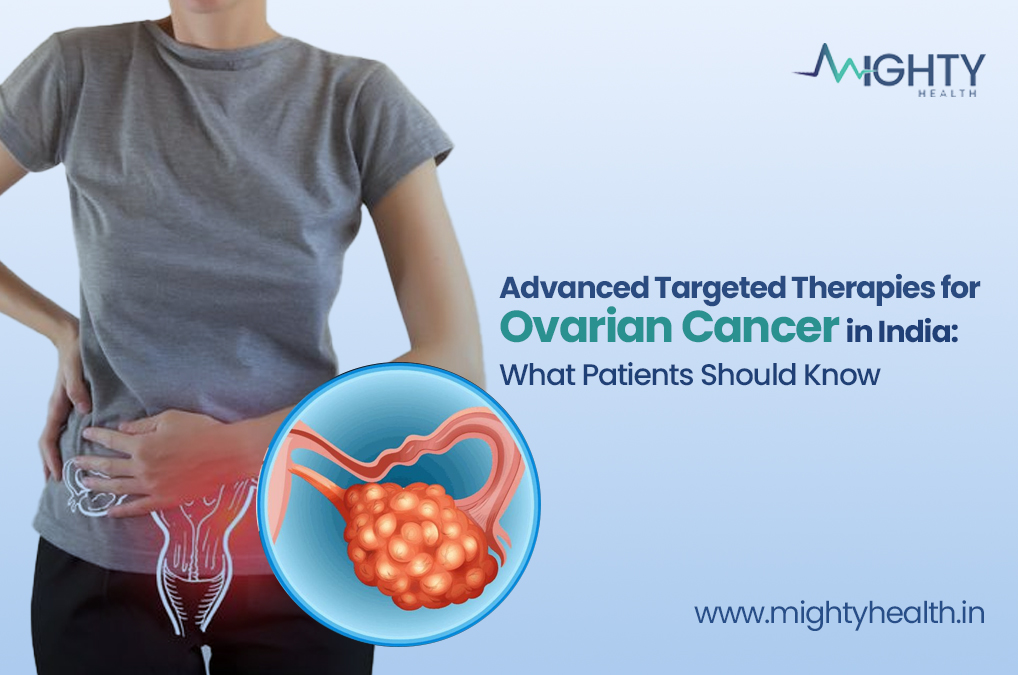
Understanding Ovarian Cancer
Ovarian cancer starts in the ovaries—the organs that make eggs and hormones like estrogen and progesterone. Most cases, about 90%, are a type called epithelial ovarian cancer.
You might notice signs like constant bloating, pain in your pelvis or belly, trouble eating or feeling full way too fast, and needing to pee all the time. There’s also unexplained tiredness or changes in how you go to the bathroom. The problem is, these symptoms usually show up late, after the cancer has already spread. That’s why catching it early is so tough.
Doctors usually treat ovarian cancer with surgery to remove the tumours, plus chemotherapy with drugs that use platinum. After that, maintenance therapy helps keep the cancer from coming back.
Lately, targeted therapies have changed the game for ongoing treatment, especially if the cancer returns.
What is Targeted Therapy?
Targeted therapy is a newer method of treating cancer that focuses on particular genes, proteins, or pathways that promote the growth and survival of cancer cells.
In contrast to chemotherapy's non-selective destruction of rapidly dividing cells, targeted therapies work by interrupting the molecular signals that enable cancer cells to replicate. By using this method to target the molecular signals that are responsible for the growth of cancer cells, targeted therapies cause less damage to normal cells and frequently result in fewer side effects.
For example, targeted therapies may be used to:
- Provide maintenance therapy after surgery and chemotherapy
- Treat recurrent ovarian cancer
- Treat cancers with particular genetic mutations
Why Targeted Therapy is a Breakthrough in Ovarian Cancer
Ovarian cancer patients have seen an increase in their overall outcome since the introduction of targeted therapies.
Some of these benefits include:
Survival benefit
Targeted therapies help to slow the progression of tumours, thereby giving the patient the ability to live longer without having the disease worsen.
Personalised approach
Therapies can be selected for the patient based upon the mutations that exist in their genes, such as BRCA mutations, etc.
Decreased amount of systemic side effects
Due to the pathway specificity of the targeted drugs, the degree of side effects associated with the use of these drugs is generally less than with the use of traditional chemotherapeutic agents.
Increased quality of life
Most of the targeted therapies are taken in an oral form, and therefore, they allow the patient to be treated at home.
Why Targeted Therapy Matters for Ovarian Cancer
Targeted Therapies Have a Number of Advantages:
More Effective: Can be used when standard chemotherapy no longer works.
Prolonged Time to Recurrence: Very effective as maintenance therapy after a patient has successfully finished his/her initial course of chemotherapy, and therefore can significantly prolong the time until the cancer returns.
Extended Overall Survival: Shown to prolong the overall survival of many patients with advanced disease, particularly for those patients with a particular genetic makeup.
More Tolerable: Many target therapies have different side effects than standard chemotherapy drugs, and some may have less severe side effects than standard chemotherapy drugs (but they do have their own unique side effect profiles). This can result in a better quality of life during treatment.
Personalised Medicine: When treatment is becoming more and more personalised on the basis of the molecular characteristics of the tumours of individual patients, as identified by biomarker tests.
Types of Advanced Targeted Therapies for Ovarian Cancer
In India, doctors now have several targeted therapies to treat ovarian cancer, and PARP inhibitors stand out as a big step forward.
Here’s the deal with PARP inhibitors: cancer cells need ways to fix their DNA to keep growing. PARP inhibitors shut down those repair tools, especially in cancer cells with BRCA mutations, so the cells break down and die.
These drugs really help patients who have BRCA1 or BRCA2 mutations, or those with homologous recombination deficiency (HRD). The main PARP inhibitors you’ll find here are olaparib, niraparib, and rucaparib. Usually, doctors give them after chemotherapy to keep the cancer from coming back.
Studies show PARP inhibitors do a great job of delaying cancer’s return in people with BRCA-mutated ovarian cancer. They block the cancer cells’ ability to fix their DNA, which eventually kills the tumor.
Like any treatment, there are side effects. The most common ones are fatigue, nausea, anemia, and low platelet counts. But honestly, compared to traditional chemo, most people handle these drugs pretty well.
Anti-Angiogenesis Therapy
Anti-angiogenic therapy is another big player in targeted cancer treatment. Basically, it stops tumours from building new blood vessels. Tumours can’t grow without a fresh blood supply, so this approach cuts off their nutrients and slows them down.
One of the most common drugs here is bevacizumab. It’s a monoclonal antibody that blocks the VEGF protein—the thing that tells the body to make more blood vessels. Doctors usually give bevacizumab along with chemotherapy, and then keep patients on it afterwards as maintenance.
Research backs this up. When patients get both bevacizumab and chemo, their tumours respond better, and the cancer takes longer to come back. Ovarian cancer patients, in particular, see real benefits: tumours shrink more, the disease slows down, and overall outcomes improve.
Of course, there are side effects. Some people develop high blood pressure, some have protein show up in their urine, and—though it’s not common—there can be bowel complications. That’s why doctors keep a close eye on anyone getting this treatment.
Antibody-Drug Conjugates (ADCs)
Antibody-drug conjugates are changing the game for targeted cancer therapy.
ADCs have two main parts. First, there’s an antibody that zeroes in on a specific protein found on cancer cells. Then, attached to that antibody, there’s a strong chemotherapy drug. The antibody acts like a guided missile, carrying the chemo right to the cancer cells and sparing most of the healthy tissue along the way.
Take mirvetuximab soravtansine, for example. This ADC targets Folate Receptor Alpha (FRα), a protein that shows up a lot in ovarian cancer cells. Doctors use it in patients dealing with platinum-resistant ovarian cancer who have tumours that test positive for FRα.
With this kind of precision, treatment works better and causes less widespread harm to the rest of the body.
Immunotherapy in Ovarian Cancer
Immunotherapy is a newer way to treat cancer. Rather than going after the cancer itself, it fires up the immune system so it can spot and destroy cancer cells.
Some drugs, like pembrolizumab and dostarlimab, block certain checkpoints in the immune system—the ones that usually hold it back from attacking tumours. By flipping off these “brakes,” the immune system gets a better shot at fighting the cancer.
Doctors usually turn to these therapies for ovarian cancers with specific genetic features, like MSI-H or mismatch repair deficiency (dMMR). Right now, immunotherapy helps only some patients, but researchers keep pushing to figure out how it can work for more people.
Genetic Testing: The Key to Personalised Treatment
The best way to use targeted therapies comes from physicians' understanding of the genetic profile of a tumour.
The majority of oncologists believe that all individuals with an ovarian cancer diagnosis should also have some form of genetic testing done.
Genetic tests that may be performed on patients with ovarian cancer include:
- BRCA 1 and BRCA 2 mutation testing
- HRD Testing*
- Tumour Genomic Profiling
These types of genetic testing allow physicians to determine if targeted therapy is likely to be helpful.
Today, many large cancer hospitals throughout India offer genetic testing services.
Availability of Targeted Therapy in India
Advanced cancer treatments such as targeted therapy have already been rapidly embraced by India within just a short amount of time.
The following hospitals offer examples of the most progressive and commonly utilised programs for treating individuals with cancer:
- Apollo Hospitals
- Medanta
- Tata Memorial Hospital
- Fortis Healthcare
- Max Healthcare
Several Indian hospitals are involved in international clinical trials, allowing patients to receive new treatments while still in the experimental phase.
Cost of Targeted Therapy in India
Cost is a big worry for patients.
In India, targeted therapy usually runs anywhere from ₹1.5 lakh to ₹4 lakh per cycle. The exact price depends on the specific drug, which hospital you choose, and how long the treatment lasts.
A few things push those costs up or down:
- Whether the drug is imported or a biosimilar
- How long does your treatment last
- The hospital’s facilities
- Extra diagnostic tests you might need
Biosimilars have been a game-changer here. Indian pharma companies now make a lot of these, and they bring costs down without skimping on results.
Take monoclonal antibody therapies like bevacizumab—several Indian manufacturers now produce them, so they’re way more accessible and affordable for people who need them.
Who is Eligible for Targeted Therapy?
Only a minor proportion of ovarian tumours need to have a targeted therapy approach.
Patients who are usually provided with targeted therapy are those diagnosed with:
- Stage IV mucinous cystic ovarian cancer.
- BRCA mutation carriers
- Recurrent tumor
- Any candidates for maintenance therapy
The targeted therapy depends on clinical decision-making, which is based on several factors such as:
- Genetic test results
- Tumor stage
- Chemotherapy response
- Current health status of the patient.
The ultimate decision regarding the treatment of the patient is commonly arrived at by the suggestion of a multidisciplinary tumour board.
The Future of Ovarian Cancer Treatment
The treatment of ovarian cancer is evolving very rapidly. Recently, people have been getting very excited about the possibilities that are just in the offing.
Combination therapies, such as taking an example. The mix of PARP inhibitors, immunotherapy, and anti-angiogenic drugs is being tested by scientists. Initial outcomes are positive - they are trying to increase the survival and provide patients with improved opportunities.
Next, there is precision oncology. Through AI and genomic profiling, physicians can now narrow down on therapies that are indeed optimal for each individual cancer of a patient. It is not mere guessing any more.
And not only is it happening elsewhere. The fact that India has joined the global clinical trials implies that the patients in this country are able to access the most recent treatment earlier. The future of people who have ovarian cancer is much brighter.
To Conclude…
Advanced targeted therapies have completely changed the way doctors treat ovarian cancer in India. Now, patients have real choices—PARP inhibitors, anti-angiogenic drugs, antibody-drug conjugates, and immunotherapies. These are big breakthroughs, and honestly, they bring a lot of hope to people facing this tough diagnosis.
Even though these treatments don’t always cure ovarian cancer, they often help people live longer, slow the disease down, and make life more manageable day to day.
Things are changing fast. Research is moving forward, genetic testing is getting easier to access, and biosimilar drugs are becoming more affordable. Because of that, more patients across India can now get these targeted therapies.
If you or someone you love is dealing with ovarian cancer, talk to a specialist about personalised targeted treatments. It’s a chance to take charge and aim for better results—and a better quality of life.